
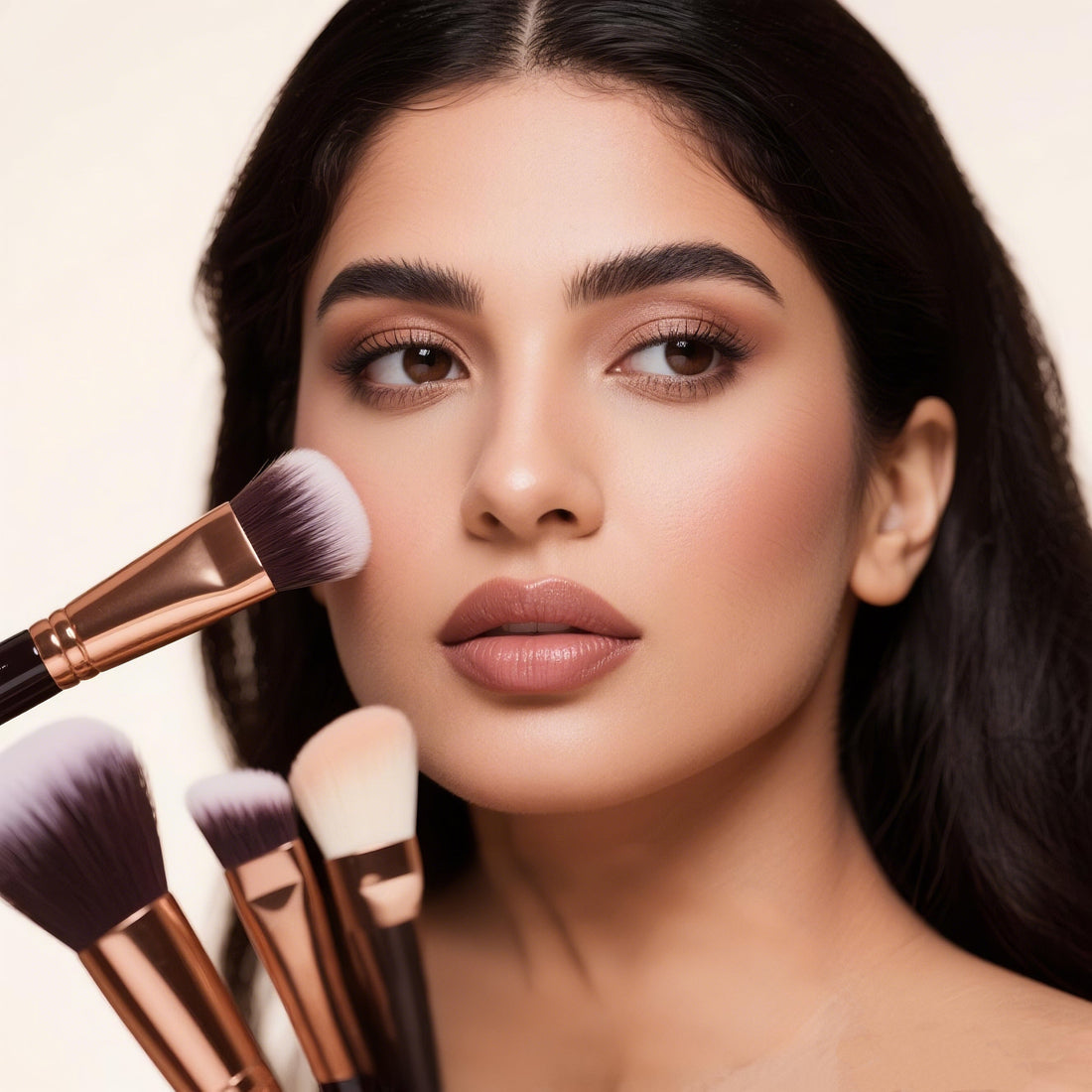
How to Choose Makeup Brushes for Your Routine—not Your Skin Type
Brush shopping is often organized around skin-type labels, but a more useful approach is to start with your makeup routine. The formula you use, where you apply it and the finish you want tell you more about the brush shape you need.
For liquid and cream foundation
Choose a dense foundation brush when you want controlled placement and buildable coverage. The FLAWLESSCORE™ Foundation Brush is designed for liquid and cream foundation application.
For setting and finishing powder
A larger, softer powder brush helps spread product across a wider area. Load lightly, tap away obvious excess and add more only where needed.
For contour and blush
Shape matters. Angled or sculpted brushes can make it easier to control placement around the cheekbones, while rounded shapes suit broader diffusion. Compare the brush head with the area where you intend to use it rather than choosing only by a marketing label.
For eye makeup
Eye brushes become easier to choose when you separate two jobs: diffusion and placement. A fluffy blending brush softens edges, while a smaller detail shader keeps pigment in a more precise area. The AUREATE LUMINAIRE SET is an option for building an edited eye-brush wardrobe.
If your skin feels sensitive
Use clean tools and light pressure, and stop using any product or application method that feels uncomfortable. Avoid assuming that a brush can treat, prevent or diagnose a skin condition. Brush material alone also does not prove that a tool is hypoallergenic.
Build around your actual habits
If you never contour, you do not need several contour brushes. If you wear foundation daily, investing in a dedicated base tool may be more useful. A smaller collection of distinct, frequently used shapes is usually easier to maintain than a large set with repeated functions.