
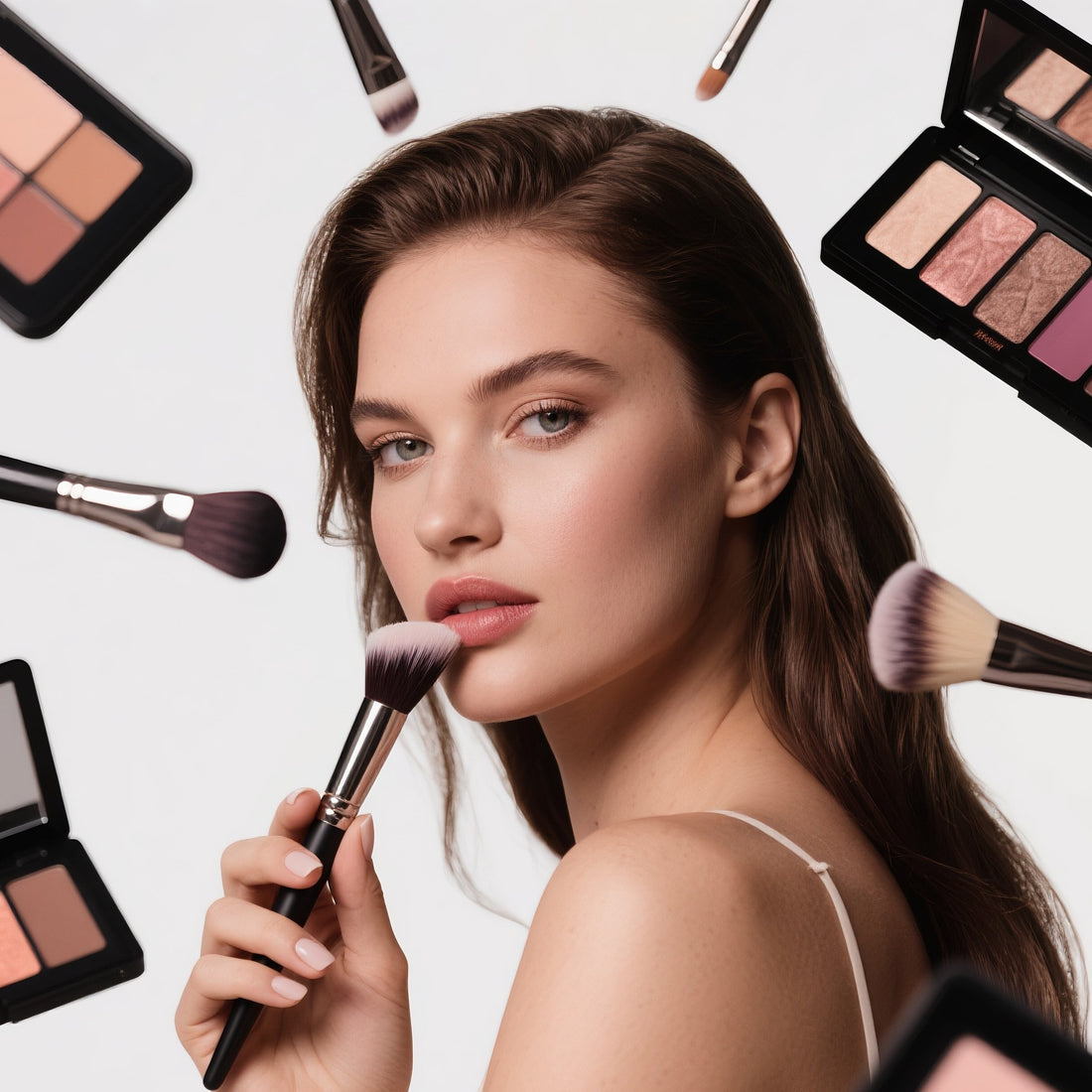
What Makes a Makeup Brush Feel High Quality? A Practical Checklist
A makeup brush can look impressive in a product photo and still be the wrong tool for your routine. Quality is easier to judge when you separate appearance from function and evaluate a few practical details.
1. Does the brush shape match a clear job?
A useful brush should make its intended task easier. Dense base brushes support controlled foundation placement, fluffy brushes diffuse powder, and smaller eye brushes give more precision. A distinctive shape is valuable when it changes how you can place or blend product.
2. Is the density appropriate?
Density affects how a brush picks up, places and moves product. More density is not automatically better. Foundation brushes often benefit from structure, while a powder or blending brush generally needs enough flexibility to distribute product softly.
3. Does the handle feel balanced?
Grip and balance influence control. A handle should feel comfortable for the motions you actually use, whether that is tapping foundation, sweeping powder or making a narrow liner stroke.
4. Does the brush keep its shape?
Inspect the head before and after cleaning. Fibers should return to a usable shape once completely dry. A loose ferrule, persistent deformation or damaged handle can make a tool harder to control.
5. Is it easy to clean?
Makeup residue should be removable with an appropriate cleaning routine. Clean the fibers thoroughly, avoid unnecessary soaking of the handle and let the brush dry completely before storing it.
6. Does it earn a place in your kit?
A high-quality brush is not useful if it duplicates three tools you already own. Evaluate new brushes by the gap they fill in your routine.
For example, the FLAWLESSCORE™ Foundation Brush fills a dedicated liquid/cream base role, while the AUREATE LUMINAIRE SET focuses on eye application.
Claims are not the same as quality
Terms such as dermatologist-approved, clinical-grade, antimicrobial, zero-shedding or a specific absorption percentage should not be treated as generic signs of quality unless the individual product has evidence supporting those claims. Judge the tool first by verifiable construction and how well it performs its intended cosmetic application task.